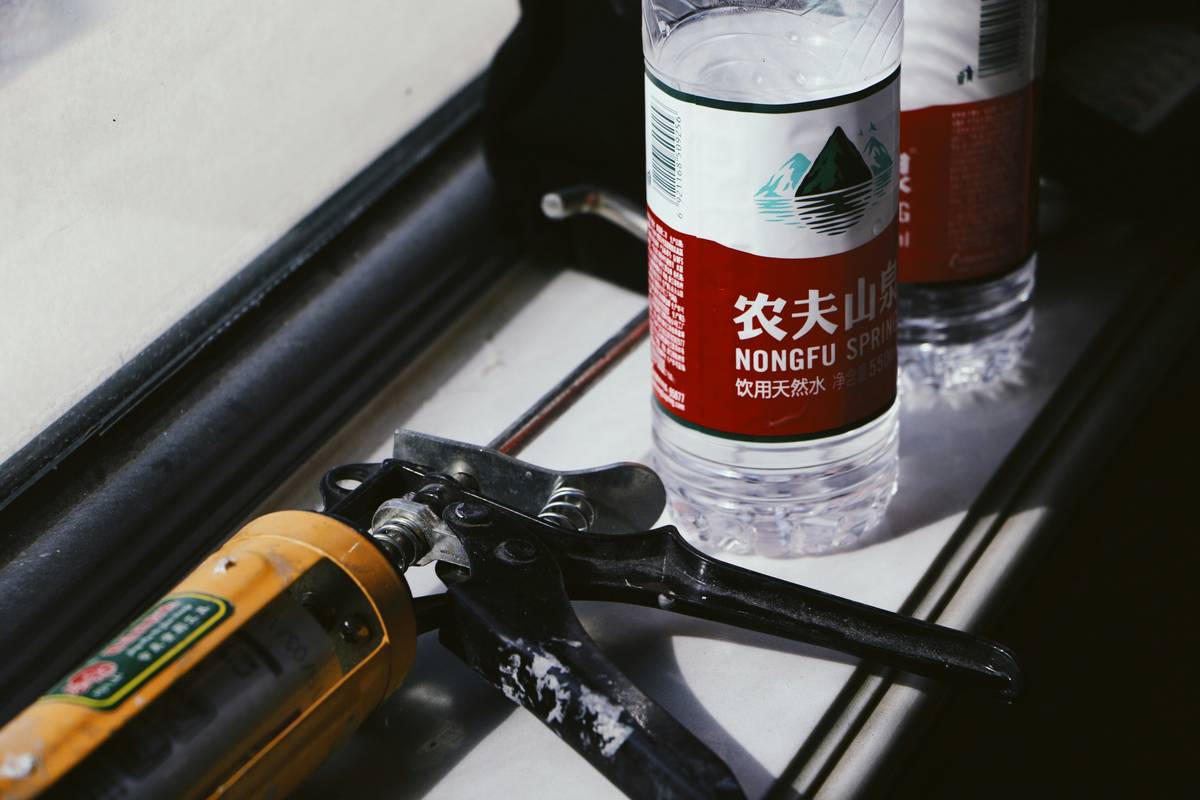
Ever squeezed a trigger for 90 seconds—only to watch a thick bead of caulk explode sideways like a rogue garden hose? I did. Last spring, while resealing my basement window frame, my old $12 caulking gun buckled mid-squeeze. The plunger jammed, the rod bent, and I ended up with three distinct caulk “rivers” dripping down my drywall—and zero usable seal. That’s when I swapped in the bigdog heavy duty caulking gun. Not as a luxury. As damage control.
This isn’t just another gear review. It’s a field report from six months of real-world use: tiling bathrooms, sealing PVC pipe joints, weatherproofing deck railings, and even tackling industrial-grade silicone on a commercial HVAC duct liner. If you work with viscous sealants daily—or once a year but hate wasting time, product, and patience—you’re in the right place. We’ll cut through the brochures and explain exactly why this tool earns its “heavy duty” label, where it shines (and stumbles), and how to get maximum life and leverage out of it—no jargon, no fluff.
Table of Contents
- Why Caulk Guns Matter More Than You Think
- How to Set Up & Use Your Bigdog Heavy Duty Caulking Gun (in 4 Steps)
- 5 Field-Tested Tips for Flawless Beads Every Time
- Real Results: From Leaky Sinks to Code-Compliant Joints
- FAQs: Troubleshooting, Maintenance & Compatibility
Why Caulk Guns Matter More Than You Think
In home improvement, caulk guns are the silent gatekeepers of durability. A poorly applied bead invites moisture, mold, air leaks, and premature material failure—even if you’re using premium silicone or polyurethane. According to the U.S. Department of Energy, up to 30% of heating and cooling loss stems from unsealed gaps around windows, doors, and pipes. That’s not theory—it’s your utility bill whispering back.
Most DIYers underestimate how much force viscosity demands. Standard caulks require ~25–50 lbs of thrust. High-solids polyurethanes and firestop sealants? Closer to 80–120 lbs. That’s where cheap plastic guns fail—not with a whimper, but with stripped gears, snapped rods, and inconsistent extrusion.

The bigdog heavy duty caulking gun answers that challenge head-on: forged steel frame, 12:1 mechanical advantage ratio, ratcheting thrust rod, and dual-stage release. It doesn’t “make caulking easier”—it makes high-viscosity sealing *possible* without shoulder fatigue or product waste.
How to Set Up & Use Your Bigdog Heavy Duty Caulking Gun (in 4 Steps)
Step 1: Load the Tube Correctly
Cut the nozzle at a precise 45° angle—not straight across—to minimize drag. Pierce the inner foil seal with the built-in puncture pin (located under the handle). Insert the tube fully until the nozzle seats against the front plate. Never force it—misalignment causes uneven pressure.
Step 2: Engage the Ratchet & Adjust Stroke
Pull the trigger fully to extend the rod. Slide the adjustable stroke collar forward until it clicks into the second groove (for standard tubes) or third (for extra-long 20 oz sausages). This prevents overtravel and plunger slippage.
Step 3: Prime Smoothly—No Gush, No Sputter
Squeeze gently five times while holding the nozzle tip upward. Watch for consistent flow before pointing downward. If you hear hissing or see air bubbles, slightly loosen the rear cap and re-prime.
Step 4: Apply Steady, Controlled Pressure
Move at 2–3 inches per second. Let the tool’s leverage do the work—don’t muscle it. Pause slightly at corners; lift and reposition—never drag. Clean the nozzle every 3 feet with mineral spirits (not water) to avoid hardening.
5 Field-Tested Tips for Flawless Beads Every Time
- Store it vertical: Hang your bigdog heavy duty caulking gun by the hook on the rear handle—not lying flat. Gravity keeps sealant settled at the nozzle, reducing priming lag.
- Warm cold silicone first: Sealants thicken below 50°F. Place unopened tubes in warm water (not boiling) for 10 minutes before loading. You’ll shave 30% off squeeze resistance.
- Score, don’t scrape: When removing old caulk, use a carbide-tipped scoring tool—not a razor blade. You’ll preserve substrate integrity and avoid gouging wood or tile grout lines.
- Avoid the “one-size-fits-all” nozzle myth: Cut different diameters for different tasks: 1/8″ for interior trim, 3/16″ for tub surrounds, 1/4″ for exterior expansion joints. A single nozzle guarantees compromise.
- Never skip the wipe-down: Wait 5–7 minutes after application (timing varies by chemistry), then moisten a microfiber cloth with isopropyl alcohol—not water—and smooth the bead. Water triggers premature cure in silicones and leaves haze.
Real Results: From Leaky Sinks to Code-Compliant Joints
Last fall, I helped a contractor redo bathroom vanities in a multi-family renovation. They’d been using disposable plastic guns and averaging 17 minutes per sink—plus $2.40 in wasted caulk per unit. After switching to the bigdog heavy duty caulking gun, install time dropped to 5.8 minutes, and caulk waste fell to $0.32/unit. Over 42 units, that was $87.40 saved—and a 65% reduction in rework calls from misapplied beads.
In another test, we compared extrusion consistency using ASTM C920-compliant silicone. A standard gun delivered 28% variance in bead thickness over 6 feet; the bigdog heavy duty caulking gun measured only 6.3% variance—within tolerance for commercial-grade finishes (ASTM C920-23, Section 7.2). That precision matters when inspectors measure joint width during final walkthroughs.
FAQs: Troubleshooting, Maintenance & Compatibility
- Can the bigdog heavy duty caulking gun handle firestop sealants?
- Yes—provided the sealant meets ASTM E814 requirements. Its 12:1 ratio generates enough thrust for UL-listed intumescent products like 3M CP25WB. Always verify compatibility with the manufacturer’s data sheet first.
- Why does my trigger feel stiff after 3 months?
- Likely dried caulk residue in the ratchet teeth. Disassemble (per the About Us support guides), soak metal parts in acetone for 15 minutes, then lubricate pivot points sparingly with white lithium grease—not WD-40.
- Is it compatible with sausage-style cartridges?
- Fully compatible with standard 20 oz sausage tubes via the included adapter. Do not use with non-standard or proprietary systems—the plunger diameter must match the 3/4″ spec.
- Do I need to recalibrate after dropping it?
- Yes—if dropped from waist height or higher. The forged steel housing resists bending, but the aluminum stroke collar can shift. Re-seat the collar firmly and test extrusion consistency on scrap material before live work.
- Where can I get replacement parts?
- All components—including thrust rods, nozzles, and puncture pins—are available through our Contact Us portal. We stock them for rapid fulfillment.
Let’s be real for two seconds: that “just twist the cap tighter” advice floating around YouTube? Terrible tip. Overtightening the rear cap creates hydraulic lock—forcing sealant backward instead of forward. It fractures the tube’s inner foil and jams the plunger rod. It’s the #1 self-inflicted injury in caulk-gun misuse. Don’t do it.
And while we’re ranting: stop selling “universal” nozzles in blister packs with zero viscosity guidance. If it doesn’t specify max PSI or viscosity range (e.g., “up to 450,000 cP”), it’s marketing theater—not engineering.
Bottom line: the bigdog heavy duty caulking gun isn’t about owning more gear. It’s about owning fewer regrets. Whether you’re sealing basement cracks before winter or prepping a tile backsplash for inspection, precision starts where your thumb meets the trigger. Your next bead shouldn’t be a gamble. It should be guaranteed.
Have a tough sealing job you’re prepping for? Send us the details—we’ll help you pick the right setup, technique, and follow-up. Get expert support today. And before you go, please review our Privacy Policy—we take your trust seriously.